

How and When to Stop Smoking and Vaping
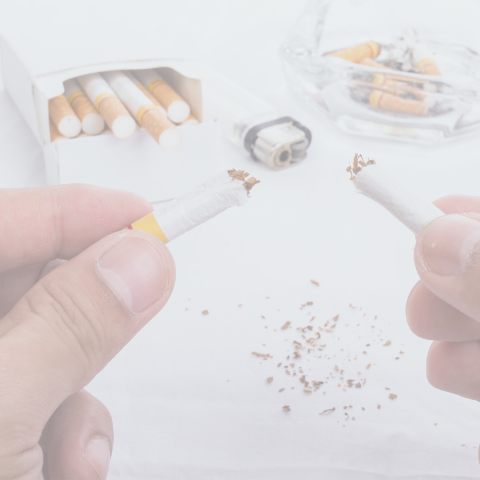
Quitting smoking or vaping is tough; thankfully, there are plenty of resources, such as these ones from the Canadian Cancer Society, that can make this journey just a little easier.
It may help to frame stopping as a “fast” that you’re undertaking to better prepare your body for surgery. Ideally, this fast will evolve into permanent cessation of smoking/vaping.
From our perspective as anesthesiologists, we want you to stop so that your surgery and recovery are as safe and quick as possible. After just a few hours of being smoke-free, the risk to your heart is already dropping, while not smoking/vaping while you recover improves your healing rate.
We recommend that you:
Start your smoking/vaping “fast” right now!
Alternatively, start this fast on the date of your pre-operative visit or at least four weeks before your surgery. Again, this is a tough process, so prepare for it with a plan.
Obtain nicotine replacement therapy (NRT), which can make cessation significantly easier. Apply one patch each morning for every pack you smoke each day. If you’re a vaper, start with one patch. You can also opt for a spray, lozenges or gum; your pharmacist can provide more specific advice. A prescription is not necessary for any of these products. Remember, irrespective of the dose of NRT you use you will still be getting far less nicotine than if you were smoking or vaping.
Let people know you’re quitting and have someone who can support you; maybe someone who has already accomplished this goal.
Change your routine so that you’re not spending time with smokers/vapers or in situations where you might be tempted to reach for a cigarette or vape.
Consider reaching out to a health care professional for help.
While we highly encourage you to cease smoking/vaping as soon as possible, at a minimum, please stop smoking/vaping at midnight before surgery, so you have at least eight hours to get rid of carbon monoxide from your body.
If you can’t stop before your surgery, treat your procedure as the break in your routine that might get you to quit.
After all, you can’t smoke while in the hospital, a period that can last from a few hours to even weeks.
Your health-care team can help you with managing withdrawal symptoms both in the hospital and at home. Ask them if they offer the popular Ottawa Model for Smoking Cessation.
Create a plan so that you don’t start again once you’re back home.
Need more motivation? Ask yourself what might help you on your cessation journey:
Why do YOU want to stop? Besides being healthier ahead of surgery, what else matters to you? Maybe protecting loved ones from second-hand smoke or being a good example to kids? Maybe to save money? Or to improve your performance in sport?
Why do YOU smoke or vape? If it’s to have something in your hands, try doodling or knitting. If you like the sensation of having something in your mouth, consider low-sugar candies or veggie sticks. If you smoke/vape to relieve stress, try to stop at a less stressful time, and get advice on other stress-relieving techniques. If you smoke/vape because all your friends smoke, try to persuade at least one of them to quit with you.
We know that quitting isn’t easy but we also know that you can do it!