

A Quick Look at Obstetric Anesthesia Care Part 3: Team-Based Care
/As the need for anesthesia care grows, so does the movement towards more team-based care. The subspecialty of obstetrical anesthesiology care, which provides anesthesia care to pregnant patients, is no exception to this shift.
Under a team-based model, “Each person has a defined role, and the anesthesiologist remains responsible for the overall plan and the important medical decisions,” explains Dr. Ron George, the Director of Obstetric Anesthesiology at Toronto’s Mount Sinai Hospital.
That plan involves the anesthesiologist working alongside anesthesia fellows and residents, anesthesia assistants, nurses, obstetricians, midwives, and other specialists.
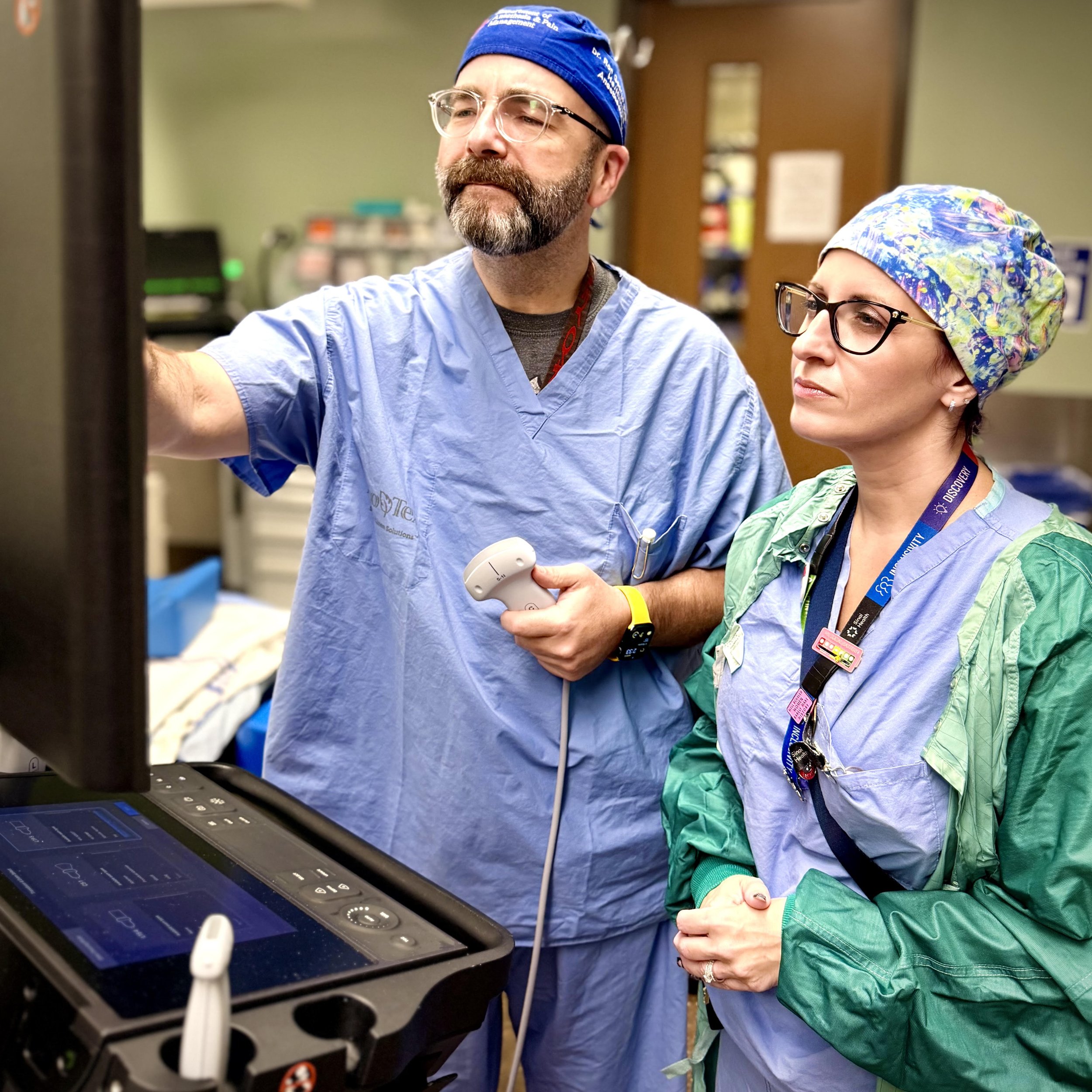
Dr. Ron George and AA Jennifer Stapley
It results in anesthesia resources being used more efficiently, allowing one anesthesiologist to care for multiple patients while those patients receive continuous care from a small team. Additionally, “The model provides additional capacity and resilience when a patient’s condition changes unexpectedly,” says Dr. George.
There is no one set obstetric anesthesiology team, not even at Mount Sinai, a hospital that has used this model for years. Dr. George explains that who makes up a care team depends on the patients and their clinical situation. However, these teams now almost always include an anesthesia assistant, also known as an AA.
“When anesthesia assistants are involved, they help prepare equipment and medications, establish monitoring, including arterial catheters and intravenous access, assist during regional or general anesthesia, and support ongoing care in the operating room and recovery area,” explains Dr. George.
One of those AAs is Jennifer Stapley. For the past eight years, she’s worked as an AA in Mount Sinai’s labour and delivery department, where she is also the professional practice lead, and oversees the AA students completing their OB clinical training at the hospital. Stapley also recently started a new role as an AA professor at Toronto’s Michener Institute.
She explains that patients may encounter AAs, and therefore team-based anesthesia care, at different points throughout their obstetrical journey.
“For routine caesarean deliveries, AAs are often there from the beginning—helping to place IVs and monitors, preparing the equipment and medications needed for anesthesia, and offering reassurance or simply holding a hand while an epidural, spinal, or CSE is performed. AAs also routinely assume care of stable caesarean patients, seeing the case through to completion and helping ensure both mother and baby are safely transferred to the PACU,” she details.
AAs also play critical roles during obstetrical emergencies where they assist with securing and managing the patient’s airway, prepare induction medications, and assist with monitoring to help the anesthesia team safely and efficiently induce general anesthesia. Stapley adds that during these high-stress situations, they also try to be a source of human connection, “We try to offer reassurance in the moments before the patient goes to sleep.”
OB patients can also cross paths with AAs when undergoing such highly specialized fetal in-utero procedures such as fetal transfusions and fetoscopic placental laser ablation with maternal sedation. “During these procedures, AAs provide procedural sedation to the mother to help manage their comfort, pain, and anxiety while the fetal team focuses on caring for their baby. Some patients return weekly or biweekly for fetal blood transfusions, and the AA can become a familiar and reassuring presence throughout that journey,” says Stapley.
Regardless of how a patient comes to receive care from an AA, “We aim to bring calm, consistency, situational awareness, and clinical expertise to the bedside,” says Stapley “We are there not only to support the anesthesiologist and the broader healthcare team, but also to provide a steady and reassuring presence for patients during some of the most routine, complex, and frightening moments of their obstetrical care.”
Team-based anesthesia care also involves other medical professionals providing and coordinating care for multiple patients, all whose needs can change fast.

“Obstetrics is unique because a routine situation can become an emergency very quickly. Having a team that communicates well, trusts one another, and allows each member to work to their full scope creates a safer and more responsive environment, “ says Stapley, “From my perspective as an AA, one of the biggest advantages of team-based OB anesthesia care is having the right people, with the right skills, available when patients need them most.”
Not all hospitals in Ontario use team-based anesthesia care; this model is typically found in larger centres that have a history of employing AAs. However, as AAs become more common in provincial hospitals, so does this model. Mount Sinai regularly trains AAs in its labour and delivery department, and Stapley is excited to be growing the future of this model.
“OB anesthesia is an area where many hospitals could benefit from expanding AA services,” says Stapley, “Integrating AAs more fully into obstetrical anesthesia teams has the potential to improve OR efficiency, support anesthesiologists during high-acuity situations, and ultimately enhance patient safety.”
Dr. George agrees, “The incorporation of more AAs can help reduce historic inequities in women’s health,” he says adding, “For too long, the resources devoted to pregnancy and childbirth have not always reflected the complexity, acuity, and unpredictability of the care required. Expanding the anesthesia care team allows us to provide more consistent access to timely pain relief, closer monitoring, and specialized anesthesia support. It is one way of ensuring that pregnant patients receive the same depth of specialized, team-based care that we routinely expect in other high-acuity areas of medicine.”
Adds Stapley, “Ultimately, it’s about working together, supporting one another, and using everyone’s strengths effectively to provide the best possible care for our patients.”
Expanding team-based anesthesia care, for L&D departments and other subspecialties, is one of our organization's goals. Recent conversations with the Ministry of Health are moving us closer to growing this model. We look forward to sharing updates around this topic soon. Learn more about team-based anesthesia care and why we support it.