

Small Choices, Lasting Impact: Anesthesiologists’ Influence on Planetary Health
/By Josephine Lu Bing Liu, medical student at Schulich School of Medicine & Dentistry, Western University
To celebrate Earth Day, we’re sharing this essay penned for us by third-year medical student Josephine Lu Bing Liu. During her anesthesia rotation earlier this year, she asked her senior a simple question — why sevoflurane over isoflurane or desflurane? She expected a pharmacologic explanation but instead received an answer grounded in environmental stewardship. That unexpected perspective reframed the meaning of responsible clinical practice. Curious, she dove deeper that night, uncovering a compelling and empowering intersection between anesthesia practice and planetary health.
From Vapors to Values
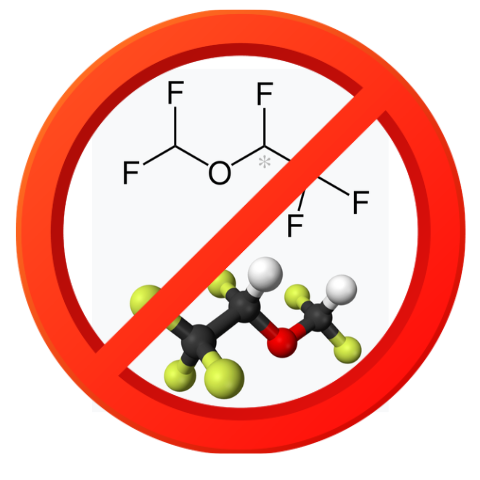
In 2010, Dr. Susan Ryan, an anesthesiologist with the Department of Anesthesia and Perioperative Care, University of California, San Francisco, and Claus J. Nielsen, a computer scientist from the University of Oslo, brought global attention to desflurane’s environmental impact, identifying it as a greenhouse gas nearly 2,500 times more potent than carbon dioxide (1). Anesthesiologists across Canada responded to this call to action and reached for more sustainable alternatives such as sevoflurane. A 2021 quality-assurance study published in the British Columbia Medical Journal demonstrated that desflurane use declined by more than 50% across multiple hospitals in British Columbia between 2013 and 2019 (2). These individual choices echoed beyond the operating room and into parliament. In December 2024, Newfoundland and Labrador became the first province in Canada to officially discontinue the purchase of desflurane in its hospitals (3), igniting a fire for more Canadian hospitals to follow suit (4). The success story of desflurane is not the final chapter, but the prologue, illustrating the unique position anesthesiologists have in shrinking not only health care’s carbon footprint, but also its broader impact on our environment.
Ubiquity Magnifies Influence
In Canada, anesthesiologists practice in every operating room, in almost every hospital, and across all surgical specialties. As a result, the operating room is the space anesthesiologists are generally the most familiar with.
It’s also where energy use, waste generation, and carbon emissions are most concentrated (5). Because operating rooms generate disproportionate waste relative to other hospital areas, even modest changes when applied consistently can yield significant cumulative benefit. Operating rooms generate roughly a third of total waste in hospitals (5,6), of which anesthesiology-related services account for roughly one-quarter. Moreover, approximately half to two-thirds of anesthesia-related solid waste is classified as clean and potentially recyclable (5); thus, there is enormous potential to reduce waste in a high-impact setting. All of these means that anesthesiologists are strategically situated when it comes to both the responsibility and opportunity to align patient care with planetary health.
It’s All About the Set-Up
Notably, anesthesiologists are uniquely positioned to influence procurement and use of sustainable devices within the operating room. Their familiarity with workflow and equipment enables them to advocate for reusable devices, lower-impact disposables, and environmentally conscious purchasing decisions. The urgency of this responsibility is underscored by a 2019 report examining 110 Canadian hospitals, which found that these institutions generated enough waste to cover twice the area of Texas every year (6). Such scale demands a transition toward a circular economy, in which medical devices and supplies are maintained in high-quality condition for as long as possible and then refurbished, repurposed, or recycled rather than discarded.
That said, systemic reform alone is insufficient. Even when greener options are available, their impact depends on individual action. Like all medical specialties, practice in anesthesiology is largely shaped by habit. Each deliberate choice, such as reaching for a reusable metal laryngoscope blade rather than a disposable alternative, reinforces that behavior and gradually shifts the standard of care. This is precisely why anesthesiologists’ control of their immediate environment matters.
Few specialties hold such sustained oversight of their clinical workspace. Anesthesiologists shape their setup with intention, and that control allows sustainability to move from abstraction to action. Something as simple as placing a recycling bin within arm’s reach and knowing what can and cannot be recycled can dramatically change waste patterns. Despite this potential and evident widespread interest in greener practices, a significant proportion of anesthesia-related waste remains recyclable but is discarded due to routine and ambiguity (7,8). Overall, it is imperative to bear in mind that while policies set direction, it is ultimately the individual who translates sustainable principles into everyday practice.
Passing Less Gas onto the Next Generation
Anesthesiology’s culture of one-to-one teaching creates a powerful multiplier effect. Anesthesiologists work closely with medical students, residents, and fellows, often for hours at a time. These moments extend beyond teaching physiology and pharmacology; indeed, they are opportunities to model professional values. When learners observe thoughtful preparation, avoidance of unnecessary waste, and deliberate resource stewardship, they internalize those habits early. Framing sustainability alongside patient safety reinforces that environmental responsibility is not a sacrifice, but an expression of professionalism.
Click to read our Position Statement Papers
Traditionally, anesthetic planning is guided solely by the patient’s best interest, and rightly so. Yet within that commitment, there is space for nuance. In the setting of one-to-one teaching, environmental health can be introduced as a legitimate and principled consideration, alongside safety and efficacy. Over time, these small lessons shape how future physicians, both within and beyond anesthesiology, approach the stewardship of healthcare resources.
The Future is Green-esthesia
Momentum around greening anesthesia care is already building. In 2023 and 2024, Ontario’s Anesthesiologists issued position statements supporting clinical practices that align with environmental sustainability, including alternatives to inhaled anesthetic gases (9).
The specialty is also increasingly demonstrating how research and innovation can align clinical excellence with environmental responsibility. Regional anesthesia exemplifies this principle. Neuraxial techniques and nerve blocks have been associated with improved surgical outcomes and faster recovery compared to inhaled techniques (10-12). A 2020 paper from New York City’s Hospital for Special Surgery’s Dr. Mausam Kuvadia and colleagues estimate that preferential use of regional anesthesia could save 750 kilograms of desflurane and 60 kilograms of nitrous oxide, equivalent to approximately 2,750 gallons of gasoline (12).
Total intravenous anesthesia (TIVA) offers a similar opportunity. Although it carries significant environmental costs related to drug production, transport, and disposal, propofol’s greenhouse gas production remains orders of magnitude lower than that of volatile anesthetics, even when life-cycle effects are considered (13, 14). A recent multicenter study found that TIVA with propofol produced nearly ten times fewer greenhouse gas emissions per hour than sevoflurane-based anesthesia (14).
Taken together, these developments underscore anesthesiologists’ ability to redefine what responsible practice looks like. The remaining question is not whether better options exist, but whether they will be used.

EssAy Author Josephine Lu Bing Liu
From Values to Ventures: A Message to All Anesthesiologists
As anesthesiologists, you are uniquely positioned to make a profound environmental impact. Every decision you make in the operating room shapes one of the most resource-intensive spaces in modern medicine. It is imperative that sustainability must never compromise patient care; but when all else is equal, choosing the lower-impact option is not only reasonable, it is ethically compelling. In an era of climate crisis, the question is no longer whether medicine should respond, but how. You are uniquely equipped to lead that response through daily practice-forming choices, system-level advocacy, research and daily mentorship. By embracing this responsibility, you ensure the operating room heals patients without harming the planet that sustains them, ultimately leaving behind a legacy of care that extends far beyond the hospital.
AI Use Disclosure: Chat-GPT was used to refine the language of this essay.
References
1. Ryan SM, Nielsen CJ. Global warming potential of inhaled anesthetics: application to clinical use. Anesth Analg. 2010;111(1):92-98. doi:10.1213/ANE.0b013e3181e058d7
2. BC anesthesiologists reduce carbon footprint by choosing wisely | British Columbia Medical Journal. Accessed February 11, 2026. https://bcmj.org/articles/bc-anesthesiologists-reduce-carbon-footprint-choosing-wisely
3. Decentering Desflurane: A Climate Action Success Story. Accessed February 11, 2026. https://choosingwiselycanada.org/news/decentering-desflurane-a-climate-action-success-story/
4. Moonesinghe SR. Desflurane decommissioning: more than meets the eye. Anaesthesia. 2024;79(3):237-241. doi:10.1111/anae.16219
5. Nadeem S, Zain M, Islam Y, et al. Recycling and Environmental Sustainability in Anesthesia Practice: Beyond Low-Flow Anesthesia. Cureus. 2026;18(1). doi:10.7759/cureus.101037
6. Duong D. Improper disposal of medical waste costs health systems and the environment. CMAJ. 2023;195(14):E518-E519. doi:10.1503/cmaj.1096046
7. Zaw MWW, Leong KM, Xin X, Lin S, Ho C, Lie SA. The perceptions and adoption of environmentally sustainable practices among anesthesiologists—a qualitative study. Canadian Journal of Anaesthesia. 2023;70(3):313. doi:10.1007/s12630-022-02392-0
8. Ard JL, Tobin K, Huncke T, Kline R, Ryan SM, Bell C. A Survey of the American Society of Anesthesiologists Regarding Environmental Attitudes, Knowledge, and Organization. A A Case Rep. 2016;6(7):208-216. doi:10.1213/XAA.0000000000000184
9. Environmental Sustainability Position Statements — Ontario’s Anesthesiologists. Accessed February 12, 2026. https://ontariosanesthesiologists.ca/environmental-sustainability-position-statements
10. Yap E, Wei J, Webb C, Ng K, Behrends M. Neuraxial and general anesthesia for outpatient total joint arthroplasty result in similarly low rates of major perioperative complications: a multicentered cohort study. Reg Anesth Pain Med. 2023;47(5):294-300. doi:10.1136/RAPM-2021-103189
11. Roberts DJ, Nagpal SK, Kubelik D, et al. Association between neuraxial anaesthesia or general anaesthesia for lower limb revascularisation surgery in adults and clinical outcomes: population based comparative effectiveness study. BMJ. 2020;371. doi:10.1136/bmj.m4104
12. Kuvadia M, Cummis CE, Liguori G, Wu CL. “Green-gional” anesthesia: the non-polluting benefits of regional anesthesia to decrease greenhouse gases and attenuate climate change. Reg Anesth Pain Med. 2020;45(9):744-745. doi:10.1136/rapm-2020-101452
13. Bernat M, Boyer A, Roche M, et al. Reducing the carbon footprint of general anaesthesia: a comparison of total intravenous anaesthesia vs. a mixed anaesthetic strategy in 47,157 adult patients. Anaesthesia. 2024;79(3):309-317. doi:10.1111/anae.16221
14.Bernat M, Cuvillon P, Brieussel T, et al. The carbon footprint of general anaesthesia in adult patients: a multicentre observational comparison of intravenous and inhalation anaesthetic strategies in 35,242 procedures. Br J Anaesth. 2025;134(6):1620-1627. doi:10.1016/j.bja.2025.01.043